

I had a leadership opportunity in change management this past school year. I made a recording of some assets I used in artificial intelligence capacity building for my district.

Stakeholders
We built the stakeholders from the top down. First, we met/proposed/planned with district leadership. Then we presented, collaborated, and reported back to (1) building Principals and (2) Assistant Principals, and (3) Instructional Coaches. The most engaged group was Assistant Principals. They demonstrated the most practical experience with artificial intelligence. I believe they may also understand the functioning gray areas between practice (read: classroom) and policy (read: well-known situations). I recommend meeting with this group separately from the principals as possible to evaluate their capacity for yourself in your school/district.
Once we had an overview of the current understanding of artificial intelligence in our district, we were ready to build a committee. In selecting members, we considered department/buildings/clusters, grade band, and leadership roles in assembling a group that can break out into approximately 4 groups to collaborate.
Questions
We asked school leaders to give us their feedback on the current reality with Artificial Intelligence from their position. We used these prompts:
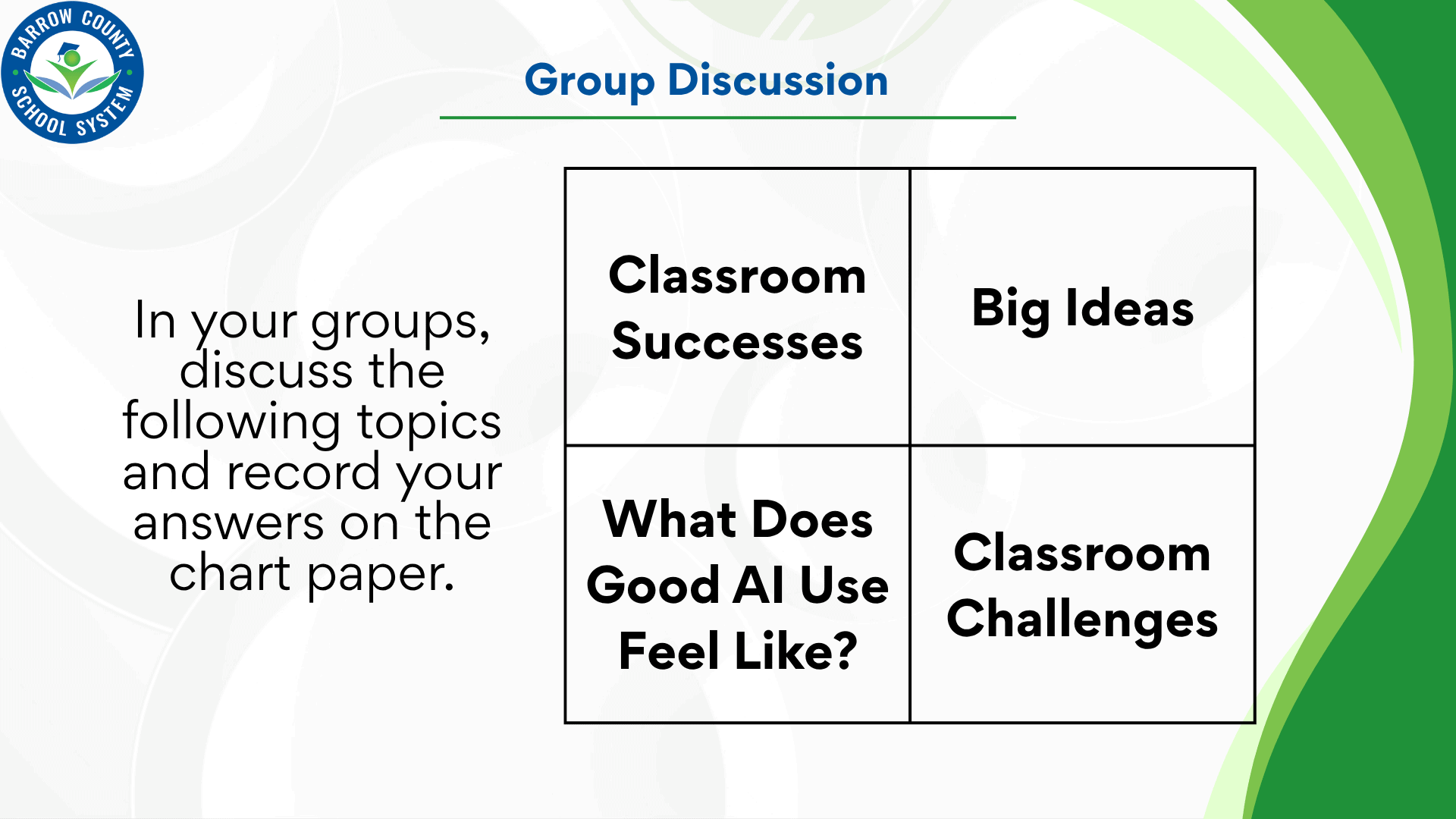
It was rarely addressed – and that told me plenty. Often leaders to classroom used that as an opportunity to steer toward a tool they had in mind, but rarely to using feelings. My idea here was to keep asking “How does that make you feel?”until whatever group I was with could get to the universal feelings that all educators want: safety, efficiency, successful. This was the hardest, but most important drive of the initiative as there are too any tool choices, many strategies, but only so many ways we want to feel when using a tool for learning and productivity. And that is an opportunity to build concensus.

We intended for the committee to be as educational as collaborative. We also intended for most of the committee members to redeliver local professional development on artificial intelligence tools and strategies within there building or areas of expertise.
We asked AI Committee members, or school leaders, to share a basic survey to their building’s classroom teachers. This was not an anonymous survey and we wanted to limit view access to the results to the school leaders. Our thought process was that any information collected in this simple survey would inform professional development opportunities in the next school year.
Answers
The most challenging thing about artificial intelligence for K-12 is that higher education has not experienced this before us – everyone in education is learning about this together. (Future post)
We leaned on existing expertise that could plug into our existing systems (technical and philosophical):
1EdTech is an existing system we use to vet applications. We had newly launched a software approval process using 1EdTech (TAMS). So, one of the activities we had our collaborative groups complete was to research an application via the 1EdTech TAMS. See an example report in the below graphic.
We knew Linnette Attai from an earlier book study on her excellent (and short) read Protecting Student Data Privacy: Classroom Fundamentals. We arranged to hear from her as a guest speaker focussed on the potential differences between consumer and educational applications.
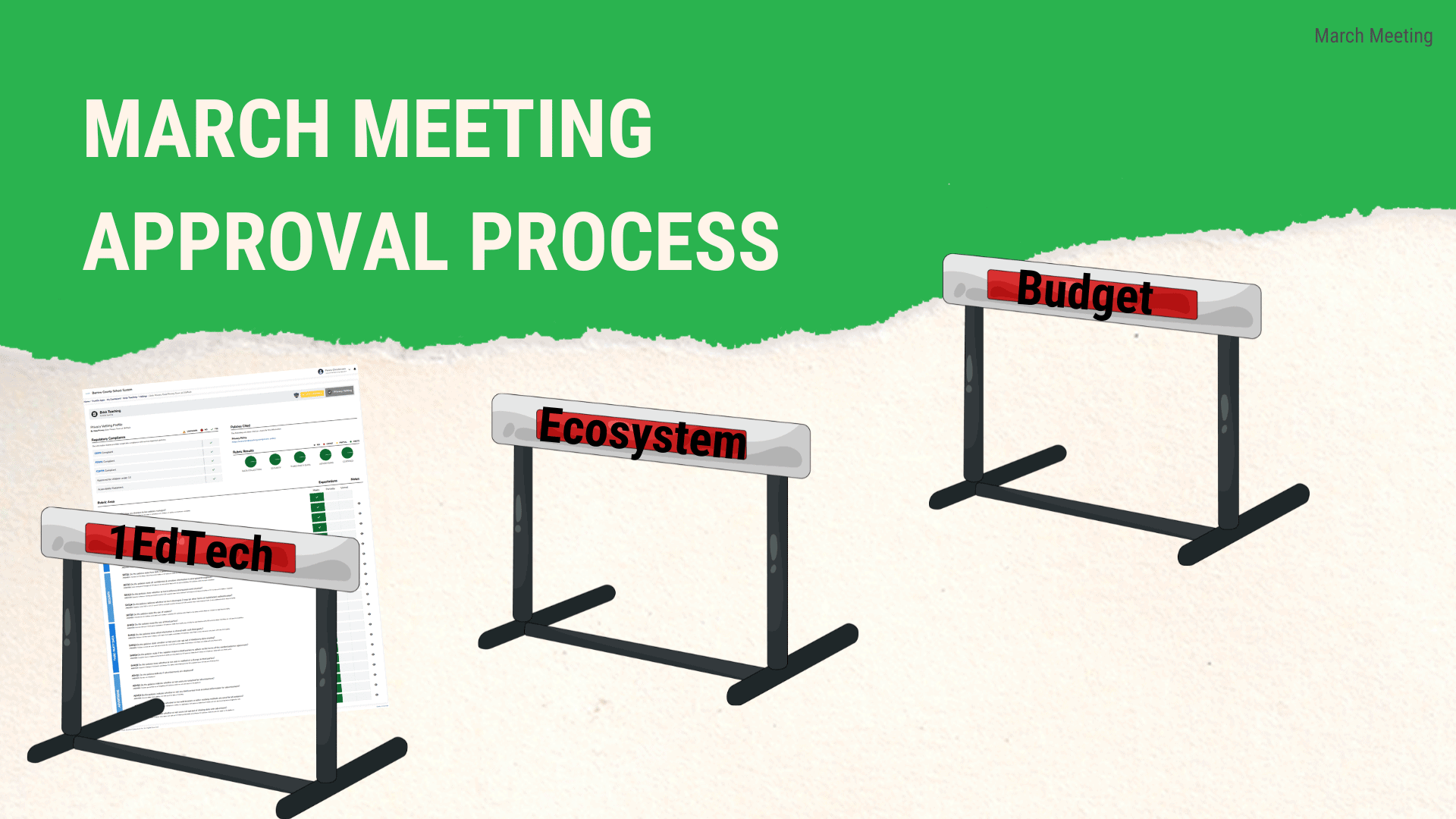
We had introduced the software approval process early in the school year. Some of the initial requests demonstrated the requesters were not sure what considerations were part of an adoption process. So I created this graphic (found in the Canva liked template copy below:
We included neighboring and similarly-sized local school district’s artificial intelligence published policies. We included professional organizations’ policy statements like ISTE, INACOL, Common Sense Media were also included as
The teacher surveys were also a source of information. The schools where the leader/committee members did not distribute the surveys showed us who needed professional development/training/leadership help in this area. For the schools were teachers responded, we gave the committee members (and Principals) access to the results.
Looking Forward
This will be an ongoing process, with continued committee meetings to help the process of implementing AI into our classrooms at the appropriate depth and speed.
Here is what you can have to replicate this committee/task force:
- Canva Presentation template copy
- (coming) Template OneNote Notebook file
- (coming) Leader Presentation information